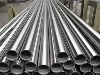


Stainless steel pipes, as an important industrial material, are widely used in the petrochemical, construction, medical device, and food processing industries due to their excellent corrosion resistance, high strength, and good processability.Their performance depends not only on the alloy composition but also on the manufacturing process. This article systematically analyzes the key characteristics of stainless steel pipe from the perspectives of mechanical properties, corrosion resistance, processability, and temperature adaptability.
Mechanical Properties
The mechanical properties of stainless steel pipe primarily include tensile strength, yield strength, elongation, and hardness. Common austenitic stainless steels (such as 304 and 316) exhibit high ductility and toughness, with tensile strength typically ranging from 500 to 700 MPa and yield strength approximately 200 to 300 MPa. Martensitic stainless steels (such as 410 and 440C) have higher hardness and strength due to heat treatment strengthening, making them suitable for high-stress environments, but their toughness is relatively low. Duplex stainless steels (such as 2205) combine the advantages of austenite and ferrite, offering both high strength and good corrosion resistance, making them suitable for high-pressure and corrosive environments.
Corrosion Resistance
The corrosion resistance of stainless steel pipes primarily stems from the dense chromium oxide (Cr₂O₃) passive film formed on their surface, which effectively prevents further oxidation. Different types of stainless steel exhibit varying corrosion resistance due to their alloy composition:
•Austenitic stainless steels (such as 304 and 316): Containing high levels of nickel (Ni) and molybdenum (Mo), they excel in acidic and chloride environments. 316, in particular, exhibits enhanced resistance to pitting and crevice corrosion due to its molybdenum content.
•Ferritic stainless steels (such as 430): They exhibit excellent atmospheric corrosion and oxidation resistance, but are susceptible to pitting in chloride-containing environments.
•Duplex stainless steels (such as 2205): They combine the advantages of both austenitic and ferritic steels, offering excellent resistance to stress corrosion cracking (SCC), making them suitable for harsh environments such as seawater and chemical processing.
Processability
The processability of stainless steel pipes directly impacts their forming and welding quality. Austenitic stainless steel has excellent hot and cold workability and can be bent, stamped, and welded, but work hardening should be avoided. Martensitic stainless steel has high hardness but poor weldability, requiring preheating and post-weld heat treatment to reduce the risk of cracking. Duplex stainless steel welding processes require high heat input control to avoid embrittlement. Furthermore, the surface finish of stainless steel pipes significantly affects their corrosion resistance, and high-precision machining can reduce the risk of localized corrosion.
Temperature Adaptability
Stainless steel pipes exhibit varying performance in different temperature environments. At high temperatures (e.g., above 500°C), austenitic stainless steels maintain good strength and oxidation resistance. However, long-term high-temperature use may lead to intergranular corrosion. Therefore, stabilized grades (such as 321 and 347) or low-carbon grades (such as 304L and 316L) should be selected. At low temperatures (e.g., -196°C), austenitic stainless steels maintain toughness and are suitable for ultra-low-temperature applications such as liquefied natural gas (LNG). Ferritic and martensitic stainless steels, on the other hand, become brittle at low temperatures, limiting their applicability.
Conclusion
Stainless steel pipe plays a key role in numerous industrial sectors due to its excellent comprehensive performance. Its mechanical properties, corrosion resistance, processability, and temperature stability make it the material of choice for numerous high-end applications. In the future, with advances in materials science, the performance of stainless steel pipe will be further optimized to meet even more demanding engineering requirements. When selecting stainless steel pipe, it is important to choose the appropriate model based on the specific operating conditions (such as the medium, temperature, and pressure) to ensure long-term reliable operation.