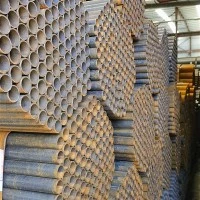


What Is Square Steel?
Square steel pipe refers to solid steel bars or hollow tubing with a square cross-sectional profile. Unlike round steel, its flat sides enable stable mounting, precise welding, and seamless assembly-making it ideal for structural frameworks, supports, and components that require dimensional accuracy. It is produced through hot rolling, cold drawing, or forging processes, with each method tailored to specific precision and strength requirements. Solid square steel (square bar) is used for load-bearing parts, while hollow square tubing prioritizes weight reduction without compromising structural integrity.

Common Sizes & Specifications of Square Steel
Common sizes of square steel cover metric and imperial systems: metric ranges from 5mm to 200mm (mainstream 10mm-100mm), imperial from 0.5inch to 3inch. 2 inch square pipe (50.8mm) is a high-frequency specification for foreign trade, suitable for various industrial scenarios.
2x2 square tubing (often referred to as 2-inch square steel pipe) is a staple in industrial and construction sectors, valued for its compact profile, high structural rigidity, and ease of fabrication-traits that make it far more maneuverable than bulkier steel beams while retaining reliable load-bearing capacity. As a standard-sized square steel product, it joins a range of common square tubing dimensions: industrial buyers typically source 1-inch, 1.5-inch, 2-inch, and 3-inch square tubing, with 2x2 being the most popular for mid-scale applications (striking a balance between strength and material efficiency).
Common Materials of Square Steel
Square steel's performance is largely determined by its material composition, with three primary categories dominating industrial use:
Carbon Steel Square Steel (Most Widely Used)
Grades: Q235 (Chinese standard), Q355, ASTM A36 (American standard), SS400 (Japanese standard).
Features: Cost-effective, excellent weldability, and balanced ductility-ideal for general structural applications.
Applications: Building frames, construction supports, machinery bases, and automotive components.
Stainless Steel Square Steel
Grades: 304, 316, 201 (common in export markets).
Features: High corrosion resistance, heat resistance, and aesthetic appeal-suitable for harsh environments.
Applications: Food processing equipment, chemical tanks, marine structures, and architectural decorations.
Galvanized Steel Square Steel
Processing: Hot-dip galvanizing (HDG) or electro-galvanizing, forming a zinc coating (60–120g/m²) on the surface.
Features: Excellent corrosion resistance, extended service life, low maintenance-combines carbon steel's strength with rust prevention.
Applications: Outdoor structures, fencing, scaffolding, agricultural equipment, marine coastal projects.

Features of Steel Square Tubing
Exceptional Structural Stability & Load-Bearing Capacity
The square profile of this tubing is engineered for optimal structural performance: its flat, parallel sides distribute weight evenly, delivering superior bending resistance and torsional rigidity compared to round tubing. This means steel square tubing can withstand heavy loads, vibrations, and external pressures without deformation-critical for applications like building frameworks, bridge supports, and machinery bases.
For instance, medium to large-sized square tubing (e.g., 2x2 inch or 50x50mm) is widely used in high-rise construction and industrial scaffolding, where stability directly impacts safety and project longevity. Even in lightweight designs, the tubing's structural integrity ensures it outperforms alternative materials, making it a reliable choice for both static and dynamic load scenarios.
Simplified Fabrication & Installation Efficiency
One of the most practical features of steel square tubing is its ease of fabrication. Its flat surfaces and sharp corners enable seamless welding, drilling, cutting, and threading-eliminating the challenges of working with curved surfaces (common with round tubing). This simplifies assembly processes, reduces labor time, and lowers production costs for manufacturers and contractors.
Whether it's custom-cutting to length for precision machinery parts or welding into complex frameworks for conveyor systems, steel square tubing adapts to diverse fabrication needs. Additionally, its uniform dimensions ensure consistent fit and alignment, minimizing errors during installation-an essential advantage for large-scale projects where precision is paramount.

Material Versatility & Customizable Performance
Steel square tubing is available in a range of materials, each tailored to specific application requirements, making it highly versatile. Carbon steel variants (e.g., ASTM A36, Q235) offer a cost-effective balance of strength and ductility, ideal for general structural use. Stainless steel options (304, 316) provide superior corrosion and heat resistance, suiting harsh environments like marine structures or food processing equipment.
Galvanized steel square tubing-coated with a zinc layer via hot-dip or electro-galvanizing-combines carbon steel's strength with rust prevention, extending service life in outdoor or humid settings (e.g., fencing, agricultural machinery). For high-performance needs, alloy steel tubing (40Cr, 20CrMnTi) delivers enhanced hardness and wear resistance after heat treatment, perfect for precision gears and heavy-duty components. This material diversity allows buyers to match tubing performance to their exact use case, from everyday construction to specialized industrial applications.
Optimal Weight-Strength Ratio
The hollow design of steel square tubing strikes a perfect balance between weight and strength. Compared to solid square bars, it is significantly lighter, reducing overall project weight without sacrificing structural capacity-critical for applications like automotive chassis, aircraft components, and prefabricated buildings.
This weight advantage not only lowers transportation and installation costs but also reduces structural stress on supporting frameworks. For example, in modular construction, lightweight steel square tubing enables easier on-site assembly while maintaining the durability needed for long-term use. Even in heavy-industry settings, this balance ensures the tubing contributes to efficient, cost-effective designs without compromising performance.
Precise Dimensional Control & Consistency
Industrial-grade steel square tubing is manufactured to strict dimensional tolerances, ensuring uniformity across batches. Hot-rolled tubing typically offers tolerances of ±0.5mm to ±1.0mm, suitable for general structural use, while cold-drawn variants achieve tighter specs (±0.1mm to ±0.3mm) for high-precision applications like medical equipment or aerospace components.
This consistency guarantees that each piece of tubing fits seamlessly into pre-designed systems, reducing waste and rework. For global buyers, adherence to international standards (ISO, ASTM, DIN) ensures dimensional compatibility across borders, making steel square tubing a reliable choice for cross-border projects.
Durability & Resistance to Harsh Environments
Steel square tubing is inherently durable, with resistance to wear, impact, and extreme temperatures. When paired with protective coatings (e.g., galvanization, powder coating) or made from corrosion-resistant materials (stainless steel), it can withstand harsh conditions-from saltwater exposure in marine applications to chemical exposure in industrial plants.
This durability translates to a longer service life, lower maintenance costs, and reduced replacement frequency, making it a cost-effective investment over time. For outdoor projects like highway guardrails or agricultural fencing, galvanized steel square tubing resists rust and degradation, ensuring long-term performance even in unprotected environments.