



Introduction
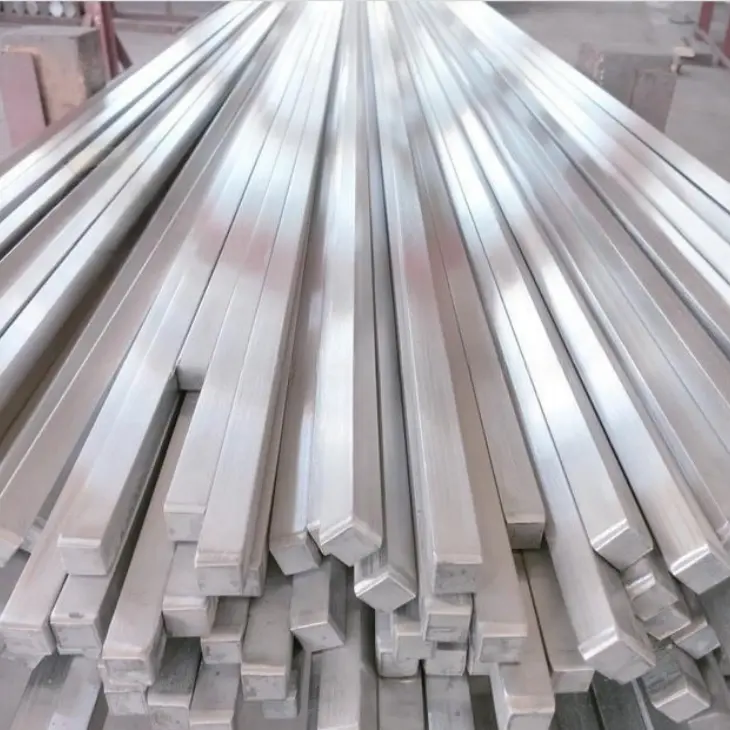
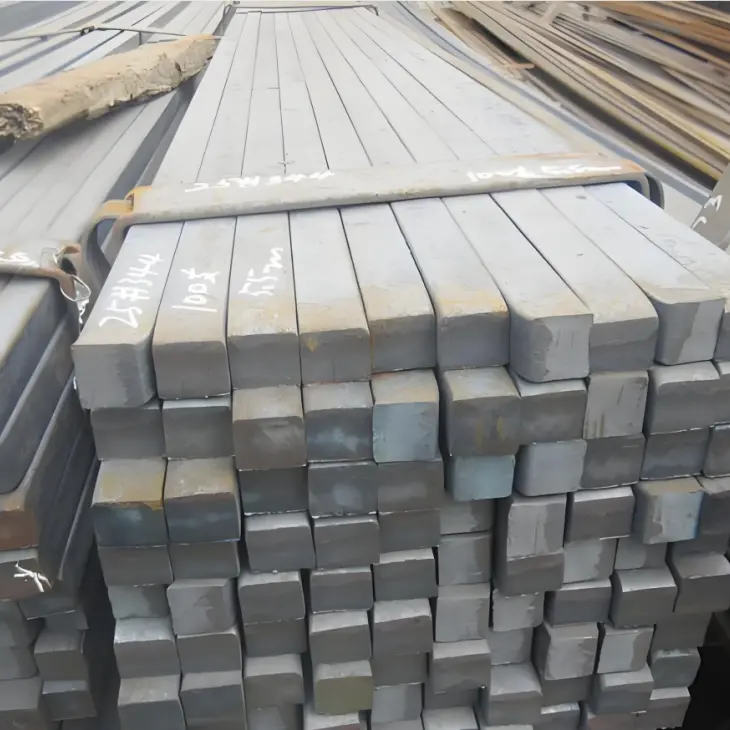
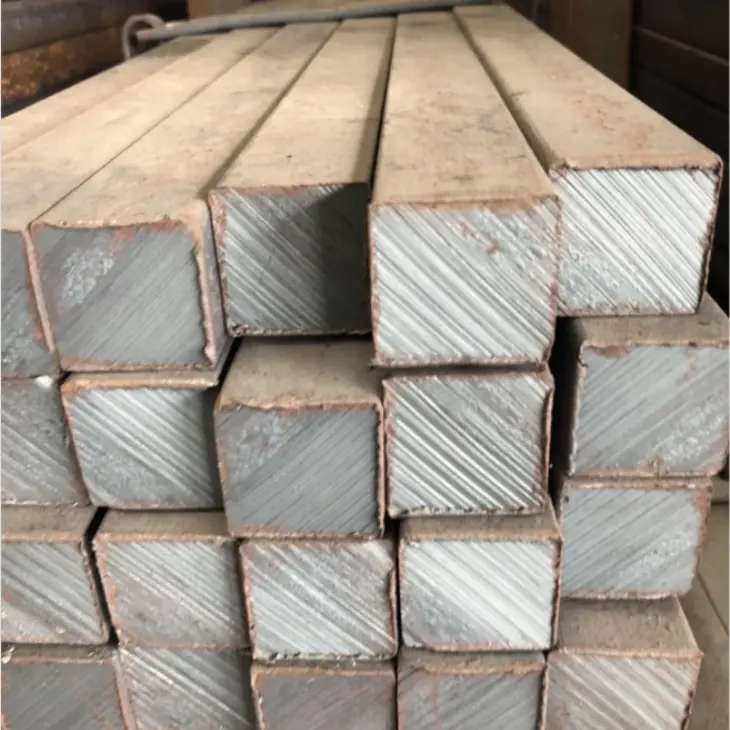
Square bar iron is a solid steel bar with a square cross-section. It is mainly used for manufacturing mechanical parts, engineering structural components, building frameworks, and as raw materials for processing other steels.
| Tolerance | ±1% |
| Standard | ASTM, DIN, JIS, BS, GB/T |
| Diameter | 5.5-250mm |
| Lenth | 1-12m, or as required |
| Surface | galvanized |
| Applications | Structural Supports, Fencing and Guardrails, Scaffolding and Formwork, Glass curtain wall frame |
| Package | Standard Seaworth Packing |
| MOQ | 1 Tons |
Features
- Precision & Consistency
Advanced cold-drawing and hot-rolling technologies ensure uniform side-length accuracy with tight tolerances of ≤±0.1 mm, along with a smooth surface finish, delivering stable and consistent quality across production batches.
- Long-Term Durability
High-quality raw materials and strict quality control extend the service life of our square steel bars, reducing replacement costs for customers in harsh environments (e.g., high humidity, heavy wear).
- Good Machining and Welding Performance
Square bar iron can be easily processed through machining, drilling, bending, and welding, allowing it to be adapted for a wide range of manufacturing and construction applications.

Materials and Chemical Composition
Plain Carbon Steel: Q235, Q345 (most commonly used, low cost, good toughness).
Alloy Steel: 45#, 40Cr, 20CrMnTi (used for high-strength mechanical parts).
Stainless Steel: 304, 316L (corrosion-resistant, used in chemical and food equipment).
Main Components: Iron (Fe) is the base material, with the carbon (C) content usually ranging from 0.02% to 2.11%, and containing small amounts of silicon (Si), manganese (Mn), phosphorus (P), and sulfur (S) and other elements.
Side lengths range from 5mm to 200mm (customizable for special needs), and standard lengths are 6m, 9m, or 12m. Surface treatments include hot-rolled (rough surface for heavy-duty scenarios), cold-drawn (smooth surface for precision parts), and galvanized (enhanced corrosion resistance for outdoor use)

Manufacturing Process
Hot Rolling (Hot Rolled): The steel billet is heated and then rolled by a rolling machine. The surface is rough, the size accuracy is medium, but the toughness is good, and the cost is low.
Cold Drawing (Cold Drawn): Hot rolled square steel is further drawn by a cold drawing machine. The surface is smooth, the size accuracy is high, the hardness and strength increase, but the plasticity slightly decreases.
Cold Bending (Cold Bending): Cold bending is performed on steel strips or plates (usually for hollow or thin-walled square steel).

Specifications and Tolerances
|
Specification
|
Measured by the side length (mm), common specifications range from 5mm to 250mm.
|
|
Small Specifications
|
5-20mm (mostly cold drawn). Medium Specifications: 20-100mm.
|
|
Large Specifications
|
Above 100mm (mostly hot rolled).
|
|
Tolerances
|
Hot Rolling: The tolerance is relatively large, generally ranging from ±0.5mm to ±2mm (increasing with the specification).
Cold Drawing: The tolerance is extremely small, up to ±0.05mm to ±0.1mm, with extremely high precision.
|

Mechanical Properties
| Tensile Strength | Generally above 370MPa - 600MPa | |||
| Yield Strength | Q235 is approximately 235MPa, Q345 is approximately 345MPa. | |||
| Elongation | Usually between 15% - 25%, representing the plastic deformation ability of the material. | |||
| Hardness | Brinell Hardness (HB) is usually between 100 - 200. | |||
Standards and Certification
Complies with international standards (GB/T 702, ASTM A615) and undergoes strict testing (tensile strength, hardness, flaw detection) to ensure no cracks, inclusions, or deformation.
Custom Services
Custom Sizes and Lengths
Square bar iron can be produced in different sizes and lengths to meet specific project requirements.
Square bar iron can be produced in different sizes and lengths to meet specific project requirements.
Multiple Steel Grades Available
Various steel grades can be provided depending on the strength, durability, and application requirements.
Various steel grades can be provided depending on the strength, durability, and application requirements.
Surface Treatment Options
Surface treatments such as galvanizing, polishing, or protective coatings can be applied to improve corrosion resistance and appearance.
Surface treatments such as galvanizing, polishing, or protective coatings can be applied to improve corrosion resistance and appearance.

FAQs
1. What is the difference between square bar iron and flat bar?
Square bar iron has equal width and height forming a solid square cross-section, while flat bars are rectangular with a wider surface and thinner thickness. Each is selected based on different structural or fabrication needs.
Square bar iron has equal width and height forming a solid square cross-section, while flat bars are rectangular with a wider surface and thinner thickness. Each is selected based on different structural or fabrication needs.
2. How is square bar iron typically supplied?
It is usually supplied in straight bars bundled together, with packaging designed to protect the material during transport and storage.
It is usually supplied in straight bars bundled together, with packaging designed to protect the material during transport and storage.
3. How should square bar iron be stored before use?
It is recommended to store square bar iron in a dry and ventilated environment, preferably off the ground and protected from moisture to maintain surface quality.
It is recommended to store square bar iron in a dry and ventilated environment, preferably off the ground and protected from moisture to maintain surface quality.
Hot Tags: square bar iron, China square bar iron manufacturers, suppliers, factory, steel profile, c section steel beams, square iron bar, H Shaped Channel, carbon steel h beam, C Shape Steel Beam


